The first five minutes: little rituals that keep you close
Hellos, goodbyes and the moment you walk through the door. Small habits that do more for your relationship than a big night out.

The short version
Home & work
- Closeness is built in small everyday moments far more than in grand gestures.
- Notice your partner's small reaches for connection, and turn towards them when you can.
- Make hellos and goodbyes count, and give phones a home when you're together.
Most of a relationship doesn't happen on anniversaries. It happens on a Tuesday, in the kitchen, in the thirty seconds after one of you walks through the door.
Those small moments add up. Here's how to make more of them.
Little reaches for connection
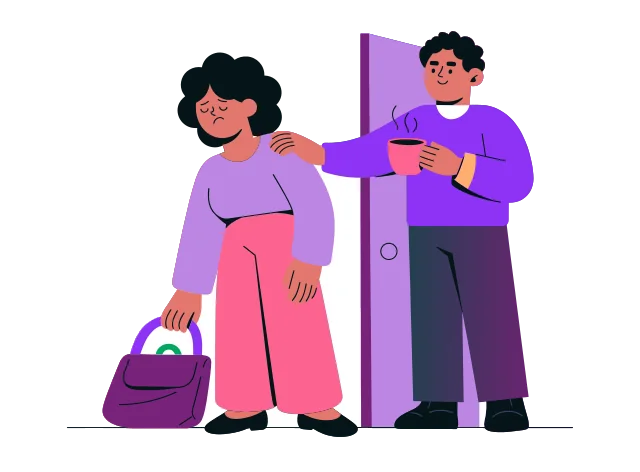
Relationship researchers call them bids: the small ways we reach for each other through the day. “Look at this.” A sigh. A hand on your back as you pass. “You'll never guess what happened.”
Each bid is a tiny question: are you with me? You can turn towards it (look up, answer, smile), turn away (miss it), or turn against it (“not now!”).
86%
of their partner's small bids were answered by the couples who were doing well in the Gottmans' research. Struggling couples answered about a third.
Julie Schwartz Gottman and John Gottman, Fight Right (2024)
Nobody catches every one. But catching more of them is one of the simplest things you can do for your relationship.
Make hellos and goodbyes count
Small rituals around the moments you part and come back together (waking up, heading out, getting home, going to bed) are little signals that you matter to each other. They help a relationship feel safe and steady.
- A proper hello. Stop what you're doing, look up and greet each other properly. A real hug, not a half-wave from the sofa.
- A goodbye that means it. “Have a good day, love you”, said while looking at them, not at your keys.
- A better question. Swap “how was your day?” for something easier to answer: “What was the best bit of today?”
- Bedtime together, sometimes. Even if one of you gets up again, going to bed at the same time a few nights a week gives you a moment to talk.
Give phones a home
Phones are the great bid-eaters. Researchers James Roberts and Meredith David studied phubbing: being snubbed by someone looking at their phone. Feeling phubbed by a partner was linked to more conflict over phones, and that conflict was linked to lower relationship satisfaction.
Instead of
Mm-hmm. (still scrolling)
Try
Hang on, let me put this down. OK, tell me.
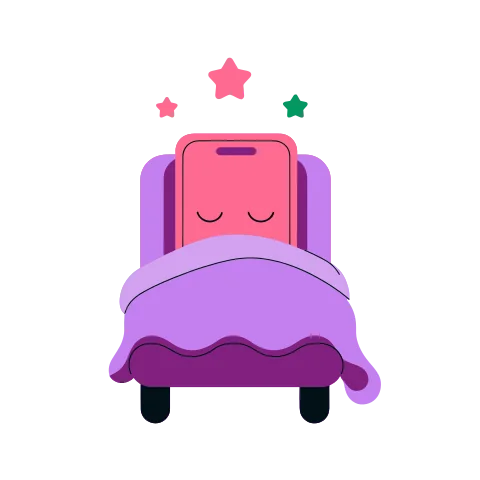
- A basket or shelf by the door where phones live in the evening.
- Phones away at dinner, even if dinner is pasta on the sofa.
- One hour a night that's screen-free for both of you.
Find your overlap
The Gottmans point out that partners' free moments only line up a small part of the time, about a quarter by their count. So connection rarely happens by accident. Plan for it: a morning coffee together, a walk after dinner, ten minutes on the sofa before the TV goes on.
Time together works best as undivided attention: being together, not just in the same room. A short daily catch-up, where you each share a couple of things from your day and how they felt, is one of the simplest ways to get it.
Ask each other
- What hello or goodbye habit would you love us to have?
- When in a normal week do you feel most connected to me?
- What small thing do I do that makes you feel looked after?
- When am I most distracted, from where you're sitting?
Sources and further reading
- Roberts, J. A., & David, M. E. (2016). My life has become a major distraction from my cell phone: Partner phubbing and relationship satisfaction among romantic partners. Computers in Human Behavior, 54, 134–141.
We describe these studies in our own words, and we're not affiliated with their authors. This article is general information, not therapy or professional advice.